
What “privacy” actually means on a lot
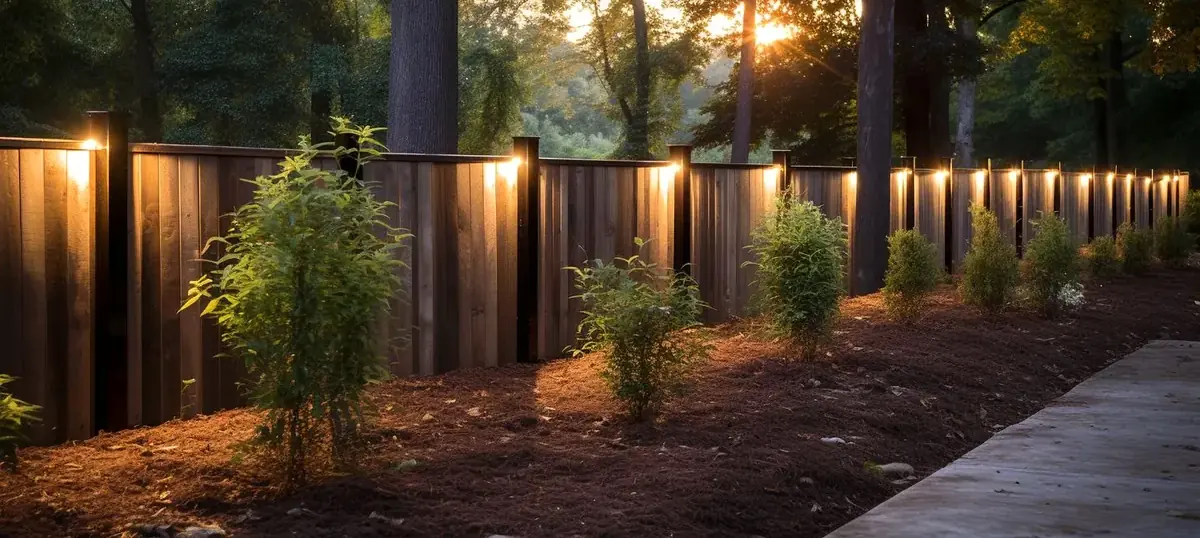
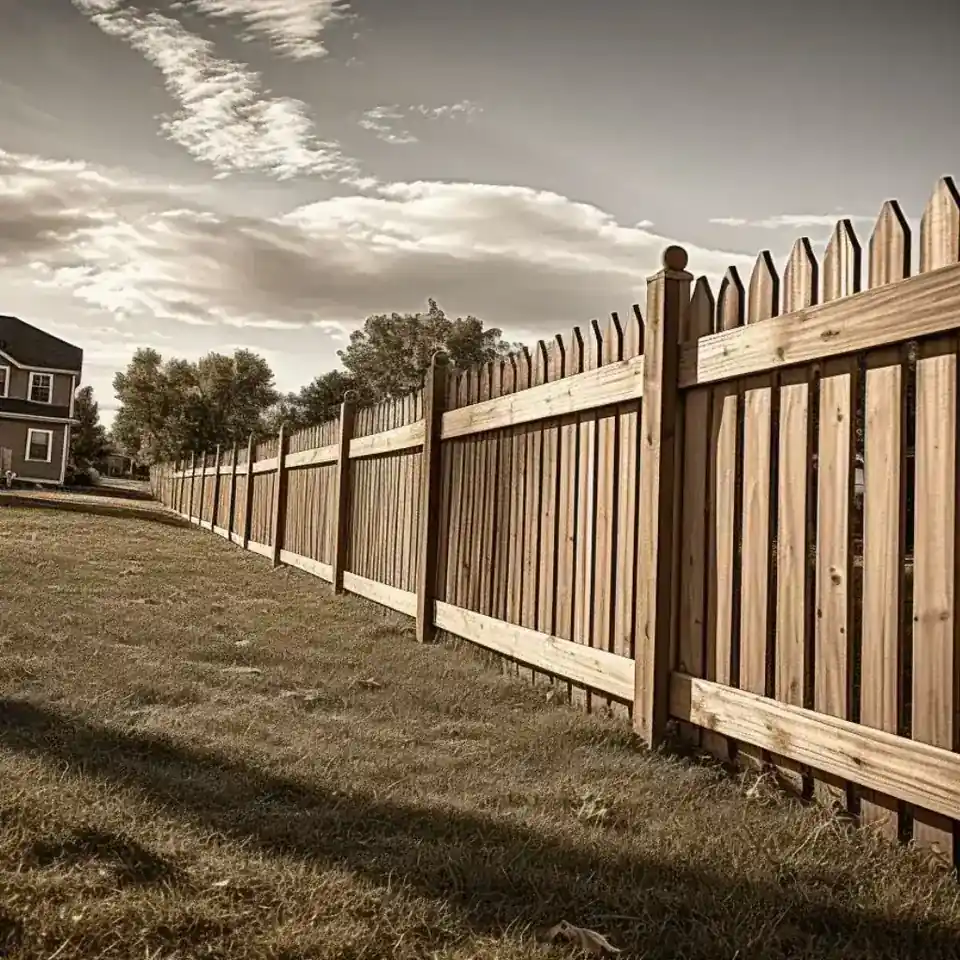
Solid six-foot wood or vinyl is the default. Shadowbox gives a nearly solid look from an angle while letting some air through, which matters in July. Board-on-board covers the gaps you see on a cheap stockade when the wood dries.
Height, lattice, and grade changes all affect how much of the yard is actually screened. A fence that follows a slope can leave a gap at the high side. We look at that on site instead of quoting a flat “six-foot privacy” line.
Material choices
Wood is the common look and the easier material to repair board by board. Vinyl is the low-upkeep look. Composite and simulated-stone systems exist when a neighborhood or HOA wants a specific face. Metal privacy systems are less common here but useful on commercial lots.
If you also need a gate a car can use, or a section that a meter reader can pass, say so. A solid wall with no plan for access becomes a problem the first week.
Neighbors, property lines, and HOAs
We do not survey lots and we do not promise HOA approval. We can build to a marked line and to a written HOA spec you provide. If the line is in dispute, get that settled before posts go in the ground.
Many Valdosta and Lowndes County subdivisions publish fence rules on height, setback, material, and color. Bring the architectural review packet or the section of the covenants that mentions fences. We will quote the face and height the document allows rather than a generic six-foot stockade that fails review.
If the HOA has no written rule, we still will not invent one. The estimate will note that approval is your responsibility.
Privacy next to a pool
A solid privacy run can sit along one or more sides of a pool area, but a legal pool barrier has its own rules for height, gaps, climbable rails, and self-closing, self-latching gates. Those details live on the pool fence page.
When the job is both a privacy screen and a barrier, we plan the solid sections and the code-sensitive openings together so the yard does not end up with a solid wall that fails inspection at the gate.
Rental and VSU-area privacy
Off-campus houses and small multi-unit rentals near Valdosta State University often need a solid rear or side screen: tenants want a private patio, landlords want fewer neighbor complaints, and headlights or student traffic on side streets make a see-through fence a poor fit.
We install the same wood, vinyl, and composite privacy systems used on owner-occupied lots. The difference is usually the gate plan (trash, parking, meter access) and whether the owner wants a low-upkeep face that survives student turnover. We do not claim student-housing contracts or university vendor status.
Questions we hear on this work
- How tall can a privacy fence be in Valdosta?
- Most backyard privacy fences are six feet. Taller work depends on the lot, the use, and any local or HOA rules. We will not guess a code height on a webpage. Ask during the estimate if you need more than six feet.
- Will a privacy fence block noise?
- A solid fence cuts some street and neighbor noise. It is not a sound wall. If noise is the main problem, we will be honest about what a fence can and cannot do.
- Do you handle HOA approval for privacy fences?
- No. We build to the written HOA or architectural-review language you provide. Approval, application fees, and review timelines stay with the property owner.
- Can a privacy fence also serve as a pool barrier?
- Parts of it can, if the height, gaps, and gate hardware meet the barrier rules the inspector applies. See the pool fence page for barrier details; this page stays focused on the screen.
- Do you install privacy fences on rentals near VSU?
- Yes, for the same materials and layouts used on other residential lots. Tell us about tenant access, trash, and parking so the openings match how the property is actually used. We do not claim university vendor status.