What commercial jobs usually need
Taller chain link, heavier terminals, vehicle gates that actually line up, and a clear plan for trucks. Some sites need privacy slats or a solid screen along a street. Some need an open view for cameras.
We quote from the use: overnight equipment storage is not the same as a daytime playground, and neither is the same as a dumpster enclosure.
Common commercial chain-link specs
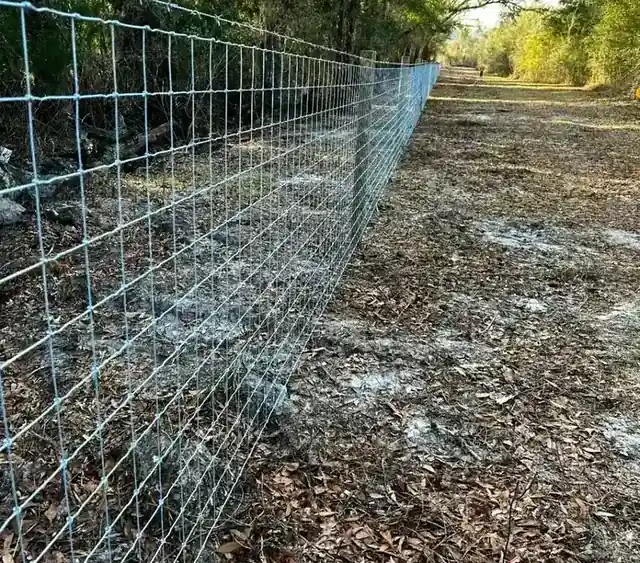
Most commercial chain link runs six to eight feet tall, with heavier wire, heavier terminal posts, and a top rail. Chain-link wire is sold by gauge, and a lower number means thicker wire. The chain-link page explains gauge, mesh, and coating in more detail.
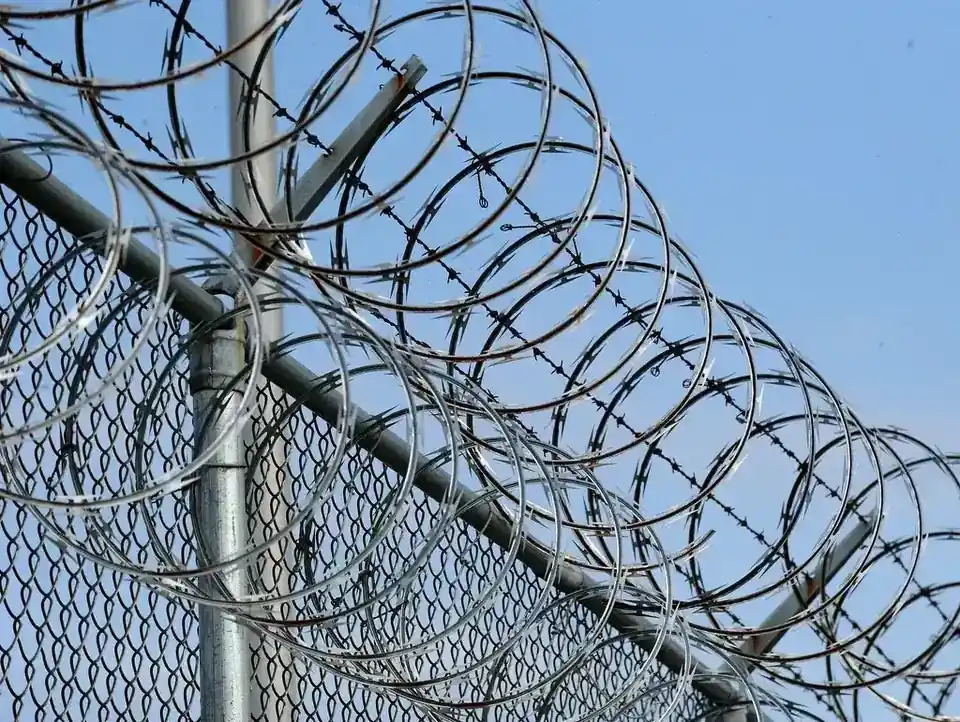
Security sites can add barbed-wire arms on top or a tighter mesh that is harder to climb and cut. Sites that face a street often want black vinyl-coated fabric or privacy slats so the fence looks finished from the road.
Slats and solid screens catch wind. On a long open run, that changes how the posts need to be spaced and set, so say so before the quote, not after.
Picking the fence by the job
Storage and equipment yards: height, a mesh that is hard to climb, and a gate you can lock and control. Lighting and camera views matter, so an open fence often beats a solid one.
Dumpster enclosures: a solid screen on three sides and gates that swing clear of the truck. The gates take a beating, so they need heavier posts than the screen panels.
Playgrounds and church grounds: the goal is keeping children in, so the gates should close and latch on their own, and the top of the fence should have no sharp ends.
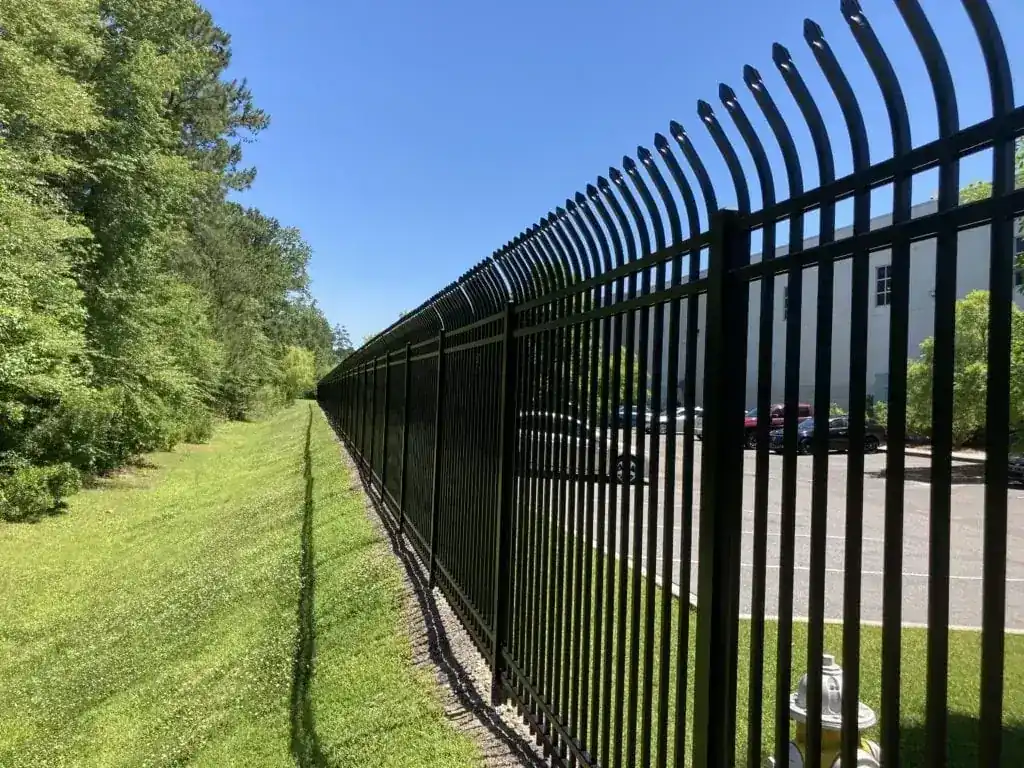
Shop frontage and offices: when the fence is the first thing a customer sees, aluminum or steel ornamental fencing can replace chain link on the street side while chain link covers the back.
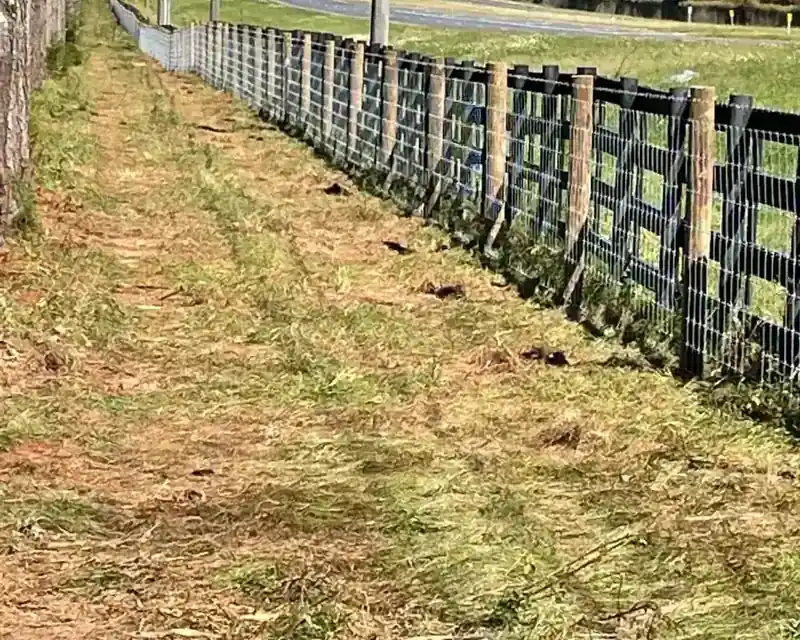
Farm lots and rural parcels: long runs of ranch rail or deer fence are a different job, covered on the ranch rail page.
Gates and after-hours access
Double drive gates and sliding gates are common. If you want an operator later, the opening and the posts have to be built for that from day one. Retrofitting a light residential gate for an opener is a bad plan.
Sites we quote around Valdosta
Contractor yards, storage lots, warehouses, churches, and the back of a shop off a busy road. Each one has a different problem. A storage lot worries about who gets in after dark. A church playground worries about who gets out. A shop may only want a screen so the street stops looking at its pallets and dumpsters.
Tell us who uses the site and when. A gate that works for one pickup a day will not hold up to delivery trucks all week.
Planning around a working site
Most commercial installs happen while the business runs. We stage materials away from the drive lane, work the line in sections when we can, and talk through where trucks need to turn. Marked utilities matter even more here, because a lot can hide irrigation, lighting, and service runs nobody has mapped in years.
If a landlord, property manager, or city office has to sign off, bring them in early. Those problems are easier to solve before posts go in the ground.
What to send for a commercial estimate
The site address and a rough line: a plat, a site plan, or a marked-up screenshot from a map works. The height you want and what the fence has to stop: people, vehicles, children, or just the view.
Gate count, the width of each opening, and the biggest vehicle that has to pass. Business hours and delivery times, so the install can work around them. Who signs off on the job, and any deadline for a bid or a lease.
With that, the estimate can price the same fence you are picturing instead of a guess.
Questions we hear on this work
- Can you fence a lot while the business stays open?
- Usually yes, if we can stage materials and keep a drive lane open. Tell us the hours and the truck pattern so the install does not block the day’s work.
- What height works for a commercial chain-link fence?
- Six and eight feet are the common requests. The right height follows from what you are protecting and what local rules allow on that property. If you want barbed wire on top, check the city or county rules first and we will price from there.
- What kind of gate works best on a commercial lot?
- Double swing gates are the simple choice when there is room for them to open. Sliding gates fit lots where a swing gate would hit parked vehicles or a slope. Either way, the gate is set on posts sized for its weight and its daily use.
- Can you build a dumpster enclosure?
- Yes, we quote dumpster enclosures as commercial work. Tell us the container size, how the truck approaches, and any rule the city or a landlord has on the screen material.
- Should a commercial fence be chain link or something else?
- Chain link is the usual choice for security and containment at a fair price. A solid screen fits dumpsters and street-facing storage. Ornamental metal fits a storefront. Many sites mix them: metal in front, chain link behind.